

When Should You Overhaul a Tube Mill Instead of Buying a New One?
When the tube mill machines in your factory start breaking down frequently, becoming a recurring problem, product quality fluctuates, or even some spare parts become hard to find, many factories reach a point where they must decide which path to take: "Spot Repair," "Overhaul," "Modify/Retrofit," or bite the bullet and invest in a "New Replacement."
This decision does not solely depend on the machine's age or the latest repair bill. A machine used for over a decade might still be a great candidate for an overhaul if its core structure remains solid and meets current production plans. Conversely, a machine that seems barely operational might not be worth a major repair investment if it has limitations in production capacity, outdated control systems, or unresolvable safety issues.
Therefore, the most cost-effective decision should consider these three factors together: 1. The technical condition of the machine, 2. Future production line requirements, and 3. The Life Cycle Cost of each alternative.
What is the Difference Between Repair, Overhaul, Modify, and Replacement?
Before comparing cost-effectiveness, we need to establish a common understanding of what each type of "machine repair" entails:
1. Repair (Spot Repair): This involves fixing specific damaged parts to return the machine to operation, such as replacing bearings, replacing seals, or repairing shafts. It is suitable when the root cause is clearly identified, the damage is localized, and the rest of the machine's systems are functioning normally. (Note: This does not include Preventive Maintenance (PM), which is scheduled maintenance designed to prevent breakdowns).
2. Overhaul: This is a major maintenance level that usually requires dismantling almost all machine parts for inspection, cleaning, repairing, manufacturing replacement parts, reassembling, and recalibrating. The goal of an overhaul is not just to make the machine "run," but to have clear objectives on which performance aspects will be restored and what the Verification criteria are.
3. Modify or Retrofit (Upgrade): This involves altering or adding new functions to the existing machine, such as modifying it to accommodate new tube sizes, upgrading the control system to be more automated, or adding safety equipment. Modification work can be done concurrently with an overhaul.
4. Replacement (Buying a New Machine): Replacing the existing asset with a brand-new machine. This option involves more than just the machine's price tag; it must include design costs, foundation work, utility installation (power/water/pneumatics), training, and the downtime lost while integrating the new machine into the existing production line.
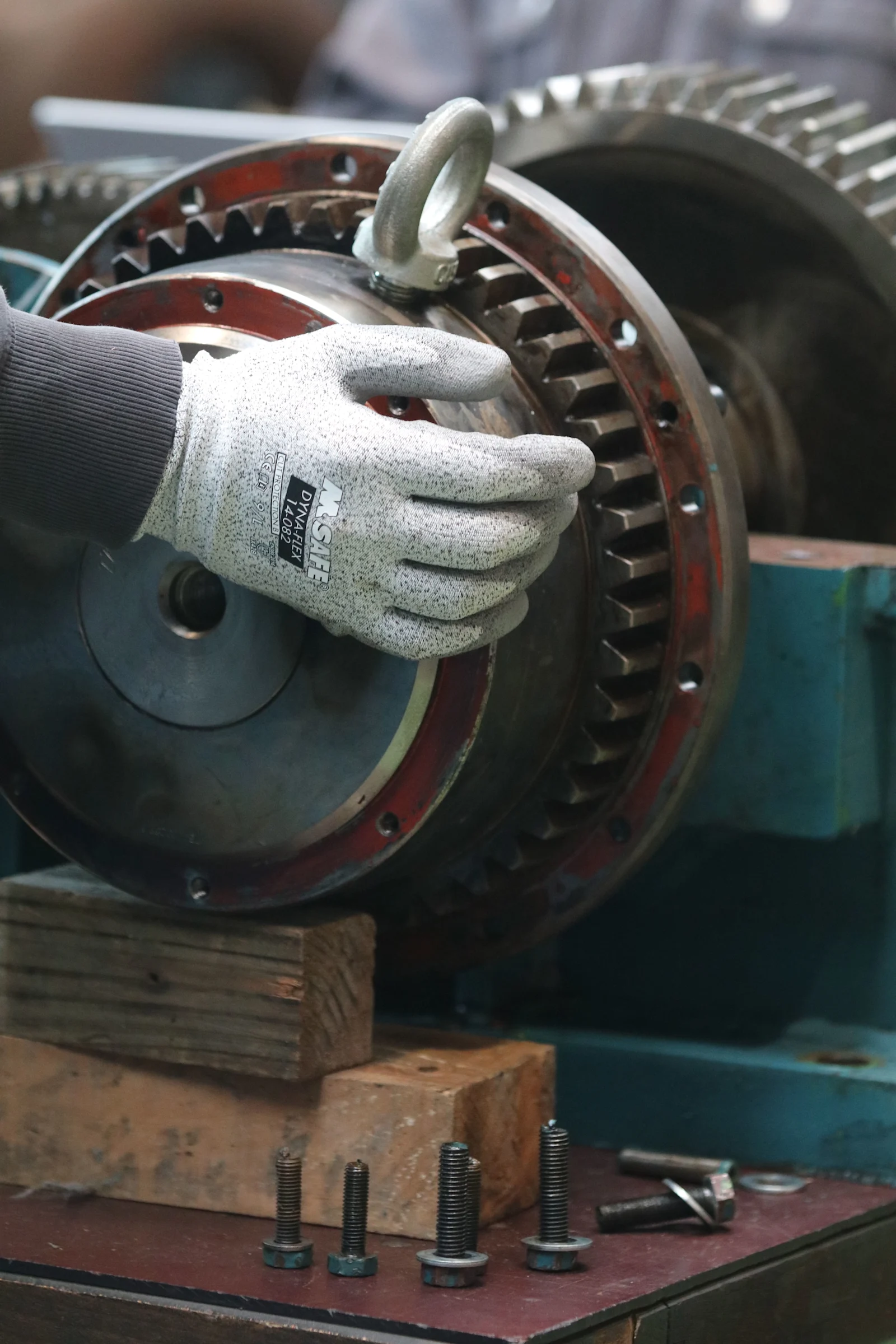
Inspecting and adjusting internal parts is a standard part of maintenance, but the scope of an overhaul must be evaluated based on the machine's overall condition, measurement results, and root causes. (Note: This image is for illustrative purposes and does not depict CHP's exact work.) ที่มาภาพ: Ann H / Pexels — Pexels License
Warning Signs: When Should You Start Assessing for an Overhaul?
If your machine exhibits more than one of these symptoms, you should seriously begin a Condition Assessment:
Recurring breakdowns with the same symptoms: If you have replaced parts in the exact same spot but it breaks down again shortly after, the Root Cause has not been resolved. For example, replacing a bearing without checking the alignment or shaft balance.
Fluctuating product quality: Accumulated clearance (play) in the machine often shows up in product quality before a complete breakdown occurs. Examples include distorted tubes, scratched surfaces, shifting weld seams, or requiring longer setup times than before.
Abnormal vibration, noise, or temperature: These are excellent indicators of abnormalities in bearings, gears, lubrication, or loose components (these should be measured with standard instruments, not just relying on a technician's feeling).
Increased backlash and mechanical play: If gears or shafts have excessive backlash, positioning becomes difficult and imprecise. Left unattended, this discrepancy will negatively affect the entire system.
Recurring leaks in oil, hydraulic, pneumatic, or coolant systems: Indicates that seals, pumps, valves, or contact surfaces are severely deteriorating.
Obsolete spare parts or control systems: When manufacturers stop producing original parts, or the old control system is too outdated to interface with modern equipment.
Insufficient production capacity: Even if repairable, the machine's speed or capabilities may no longer support your future business or marketing plans.
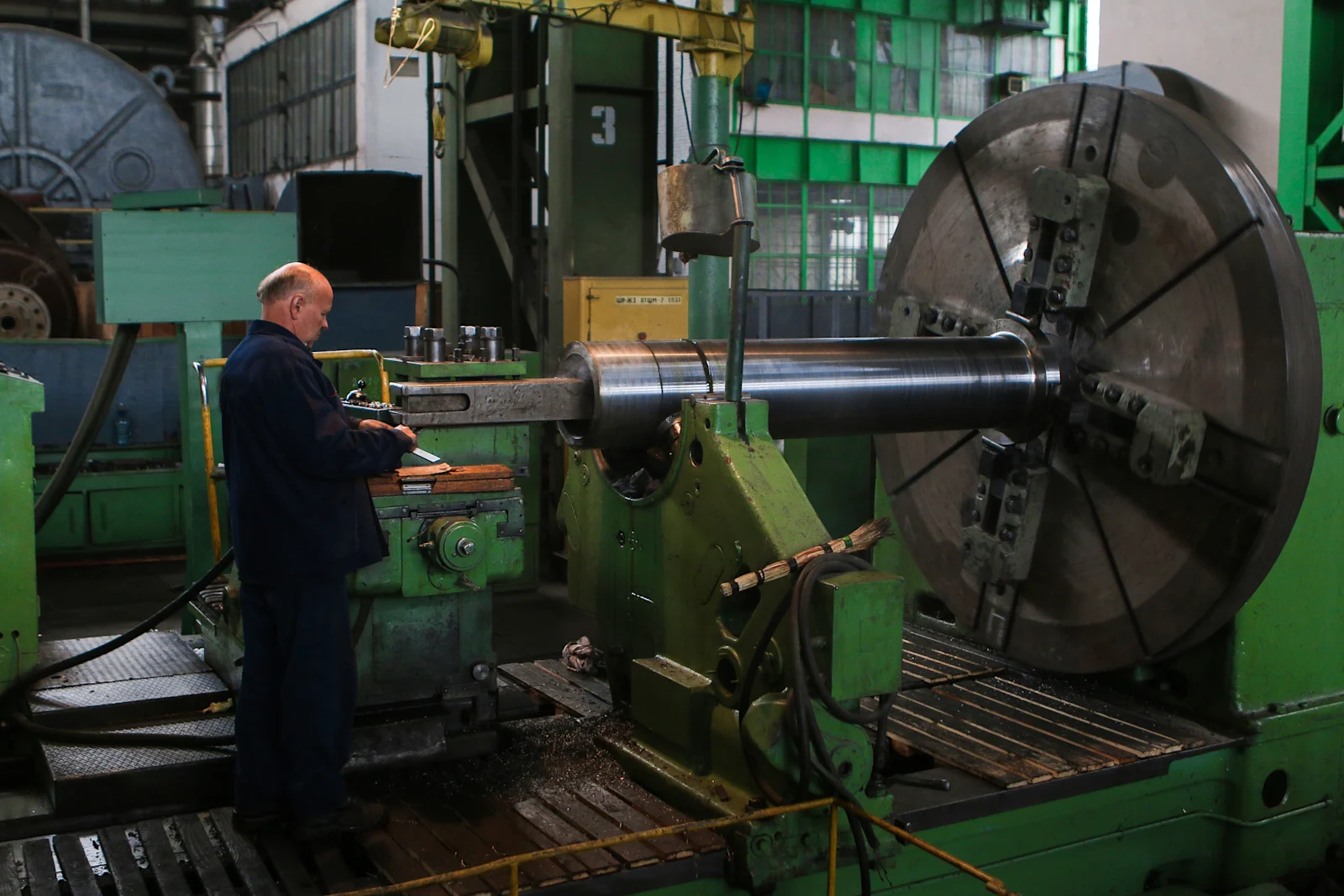
Machine condition assessments should comprehensively consider the structure, mechanical systems, electrical systems, control systems, and breakdown history before deciding to overhaul or replace. (Note: This image is for illustrative purposes and does not depict CHP's exact work or personnel.) Image Source: Kateryna Babaieva / Pexels — Pexels License
Checklist: What Needs to be Inspected Before Deciding?
A machine condition assessment should be conducted by experts, evaluating the following data:
Historical Data: Operating hours, Breakdown History, past repair costs, and incurred downtime.
Structure and Geometry: Check the frame and base for deformation. If the main structure is still sound, the likelihood of an overhaul being cost-effective is high.
Mechanical and Power Transmission Systems: Inspect the condition of shafts, bearings, gears, adjustment screws, all the way to the roll stand interfaces.
Electrical and Control Systems: Evaluate the condition of motors, sensors, PLCs, and wiring to determine if they are still safe to use or if a system upgrade is necessary.
Safety Systems: Ensure emergency stops, interlocks, and various safety sensors are present and in fully operational condition.
When is an "Overhaul" the Right Choice?
The main structure is still strong and can be re-leveled and aligned (Alignment).
The true root cause of the problem is known, and the scope of damage can be clearly evaluated.
High-quality replacement parts (equivalent or better) can be successfully sourced or manufactured.
The machine's production capacity after restoration will still meet the factory's future goals.
The factory can effectively manage and schedule the required Planned Downtime.
When Should You Consider a "New Replacement"?
The main structure is severely deformed or the foundation has subsided to the point where realignment is impossible.
You need a massive leap in production capacity, product size range, or system upgrades, making modifications just as expensive and complicated as buying a new machine.
A complete system overhaul is required (Mechanical, Electrical, and Control), leaving very few usable original parts.
There is a high risk regarding spare parts; no blueprints are available, and no reliable manufacturer can be found to reverse-engineer them.
New, cutting-edge machines offer significant benefits and flexibility that the old machine simply cannot achieve (e.g., drastically reduced changeover times).
Evaluating Cost-Effectiveness Using Life Cycle Cost (Not Just the Invoice Price)
A common mistake is comparing only the "estimated overhaul repair cost" against the "bare machine price" of a new unit. This is an incomplete comparison. The correct decision must compare the Life Cycle Cost of each alternative.
Hidden Costs of the "Overhaul" Option:
Inspection and engineering costs.
Spare parts, dismantling, and reassembly labor costs.
The financial value of lost opportunity during the machine stoppage (Planned Downtime).
The risk of discovering additional damage after dismantling.
Expenses for Test Runs and Verification.
Hidden Costs of the "New Replacement" Option:
Machine price, shipping, and insurance.
Layout design, foundation work, and installing new water/power/pneumatic systems.
Installation and integration with the existing production line.
Commissioning costs and employee training time.
Downtime lost during the dismantling of the old machine and installation of the new one.
Disposal or removal costs for the old machine.
Machine Inspection and Overhaul Workflow by CHP Engineers
If you choose to proceed with an overhaul, CHP Rolling Engineering utilizes a systematic workflow to restore your machine to peak efficiency:
Site Inspection: Inspecting the machine's condition on-site and gathering problem reports directly from your production and maintenance teams.
Root Cause Analysis: Identifying the true source of the problem, rather than blindly swapping out parts.
Clear Scope Definition: Clearly specifying which components need repair, which need remanufacturing, and which require modification.
Downtime Minimization Planning: Scheduling work and site access to minimize the impact on the factory's production downtime as much as strictly possible.
Part Manufacturing and Assembly: Producing standard-compliant replacement parts, reassembling them, and meticulously checking alignments and clearances.
Test Run and Verification: Conducting live operational tests, evaluating vibrations and temperatures, and measuring product quality to ensure it meets the agreed-upon Acceptance Criteria.
Conclusion
The decision between Spot Repair, Overhaul, Modify, or Replacement has no one-size-fits-all answer. The best choice comes from comprehensively evaluating the structural condition, mechanical systems, and comparing the Life Cycle Costs from all angles.
An overhaul is a highly cost-effective choice if the core structure remains sound and high-quality replacement parts can be sourced. However, whichever path you choose, the most crucial step is setting clear Acceptance Criteria before work begins, ensuring all parties—production, maintenance, contractors, and procurement—are aligned toward the exact same goal.
Frequently Asked Questions (FAQ)
1. Do old machines always need to be replaced with new ones? Not necessarily. If the machine's structure can be restored, replacement parts can be manufactured, and the specifications still meet your production line needs, an overhaul is a highly budget-friendly alternative that should be evaluated.
2. How does an overhaul differ from general repairs? General repairs usually address specific, localized broken points. An overhaul is a major maintenance operation that typically involves dismantling systems for deep inspection, replacing parts, realigning centers, and conducting systematic performance testing.
3. Which countries' machines does CHP inspect and overhaul? CHP handles imported machinery from various regions, including China, Taiwan, and Europe. Project feasibility is evaluated on a case-by-case basis using blueprints and on-site technical data.
4. How do I know if investing in an overhaul is more cost-effective than buying a new machine? You must evaluate and compare the Life Cycle Cost, which encompasses machine/repair costs, labor, downtime, installation, training, and the expected lifespan you will get in return. Never compare just two initial quotation prices.
5. Must the machine be tested before handover after an overhaul? Absolutely. Conducting a Test Run and Verification is the heart of overhaul work. Tests must be performed under conditions and Acceptance Criteria agreed upon before the project even starts.
CTA: If the tube mill machines in your factory are breaking down frequently, quality is dropping, or you are currently debating whether to Overhaul, Modify, or Buy New, we can help! Send your machine details (Nameplate, machine photos, anomaly symptoms, and repair history) to CHP's engineering team. We will evaluate the feasibility and propose the most cost-effective solution tailored specifically for your production line!